PLATFORM
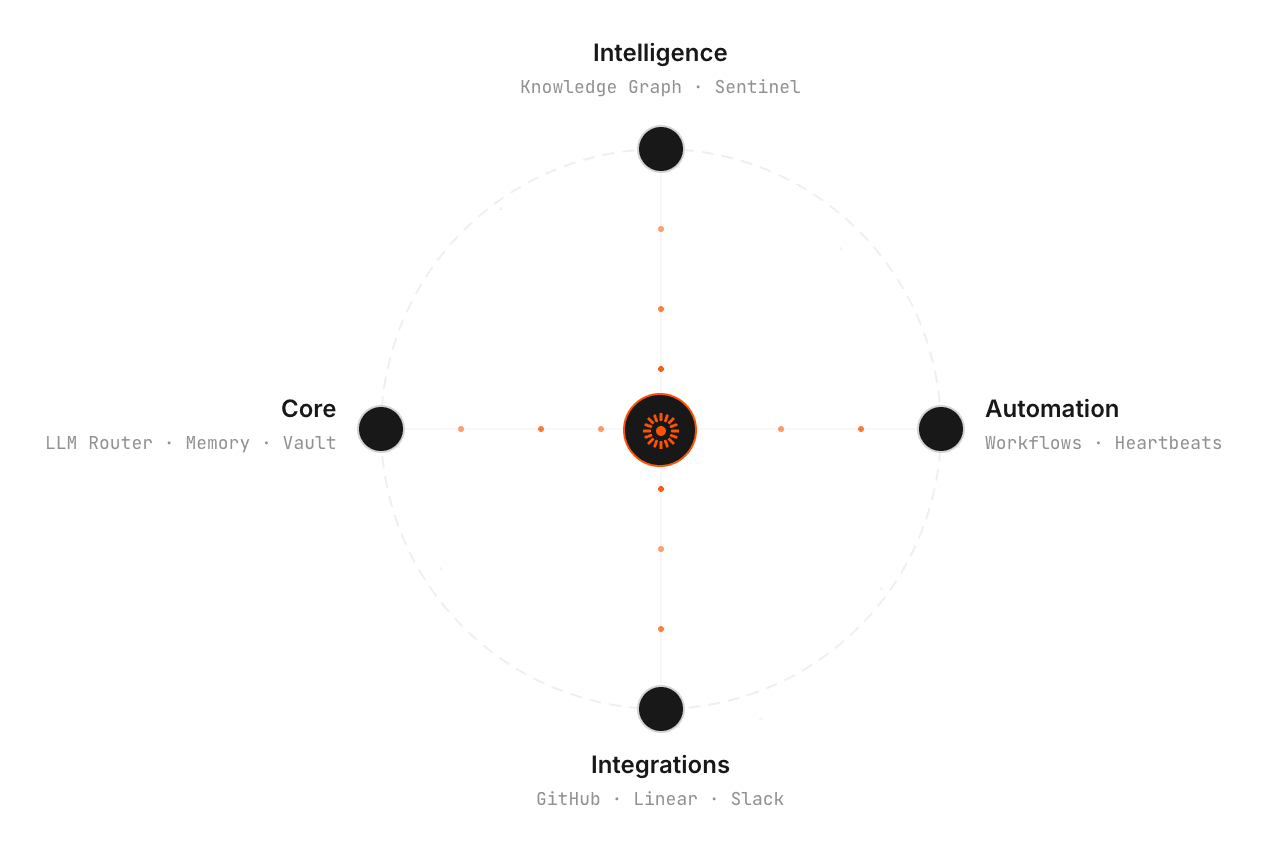
The complete AI engineering platform
Workforce coordinates autonomous agents across your entire development lifecycle — from ticket to merged PR.
GITHUB INTEGRATION
Full repository lifecycle, from cloning to merging
Workforce agents manage the complete GitHub workflow. They clone repos, create branches, write code, open PRs with labels and reviewers, review with inline comments, check CI status, and merge with SHA-pinned safety.
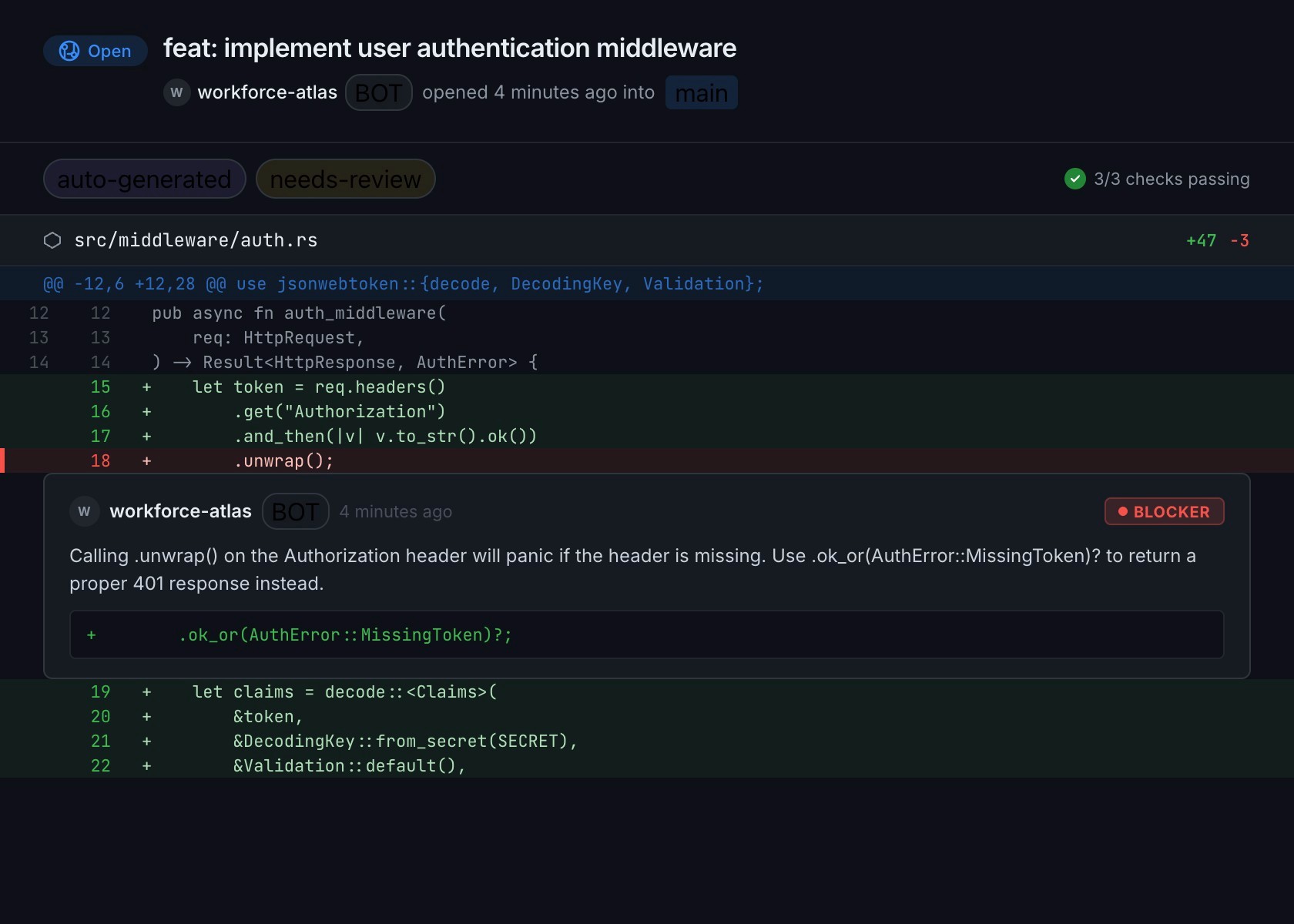
Structured code review
Agents review PRs with severity ratings — BLOCKER, IMPORTANT, NIT — and leave inline comments on specific lines of code.
SHA-pinned merging
The agent verifies the exact commit it reviewed is the one being merged — eliminating race conditions between review and merge.
LINEAR INTEGRATION
Multi-workspace issue tracking with automatic prefix resolution
Agents manage the full issue lifecycle — creating, updating, searching, and linking tickets across multiple workspaces. Ticket prefixes auto-resolve so agents always know which workspace they're operating in.
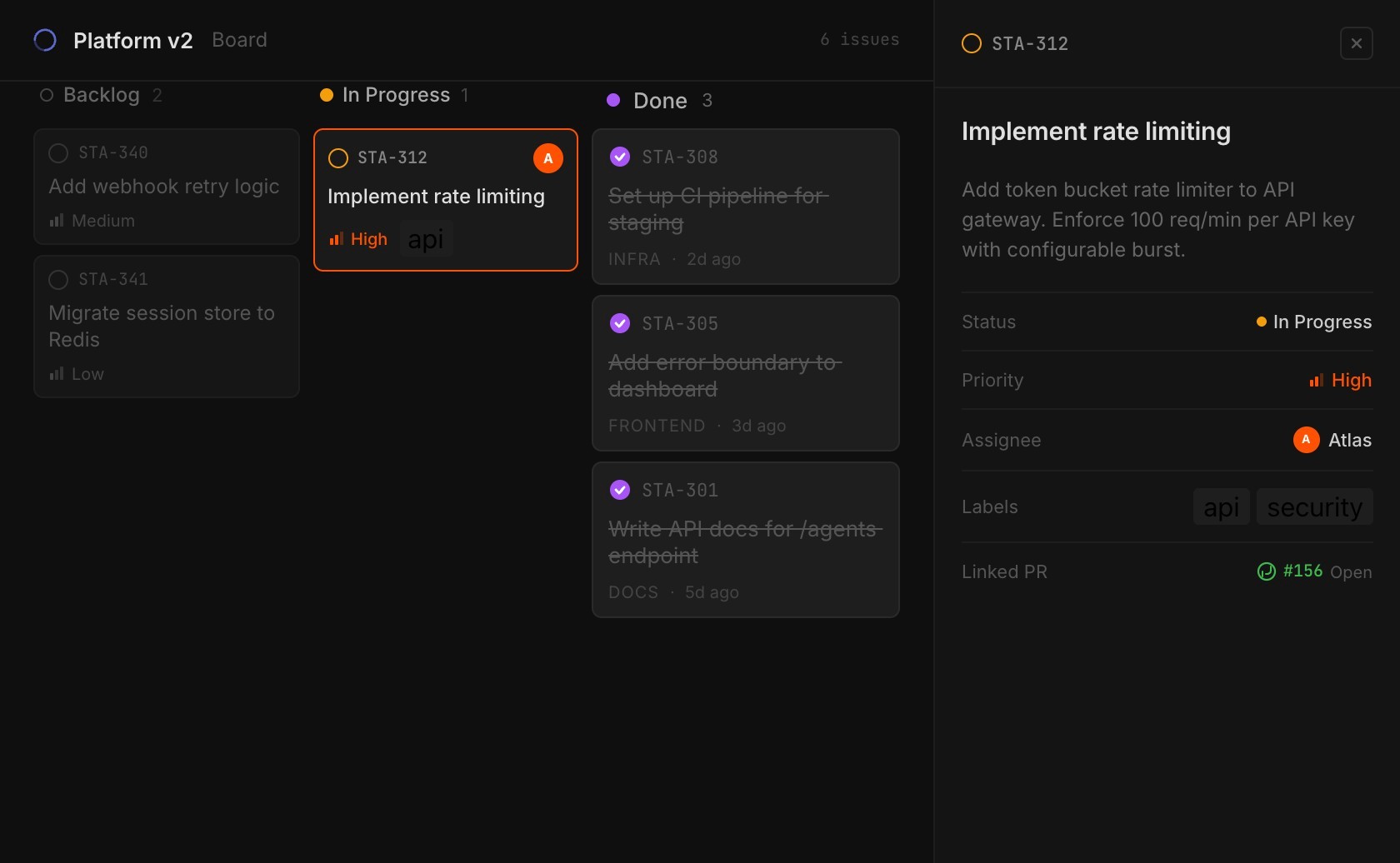
Bulk operations
Change state, priority, or assignee on multiple issues at once. Agents triage and organise your backlog autonomously.
Linked relations
Agents create blocks, blocked_by, related, and duplicate relations between issues — maintaining clean dependency maps.
The persistent memory is what sets this apart. Agents don't lose context between sessions — they remember the codebase, the conventions, and why decisions were made.

Lead Engineer
Real Estate Platform
4x
faster ticket throughput with workforce agents
SLACK INTEGRATION
Real-time presence with natural interaction patterns
Agents connect via Socket Mode with per-channel engagement controls. They reply in threads, react with emoji, upload files, and connect to multiple workspaces simultaneously — following the same social norms humans do.
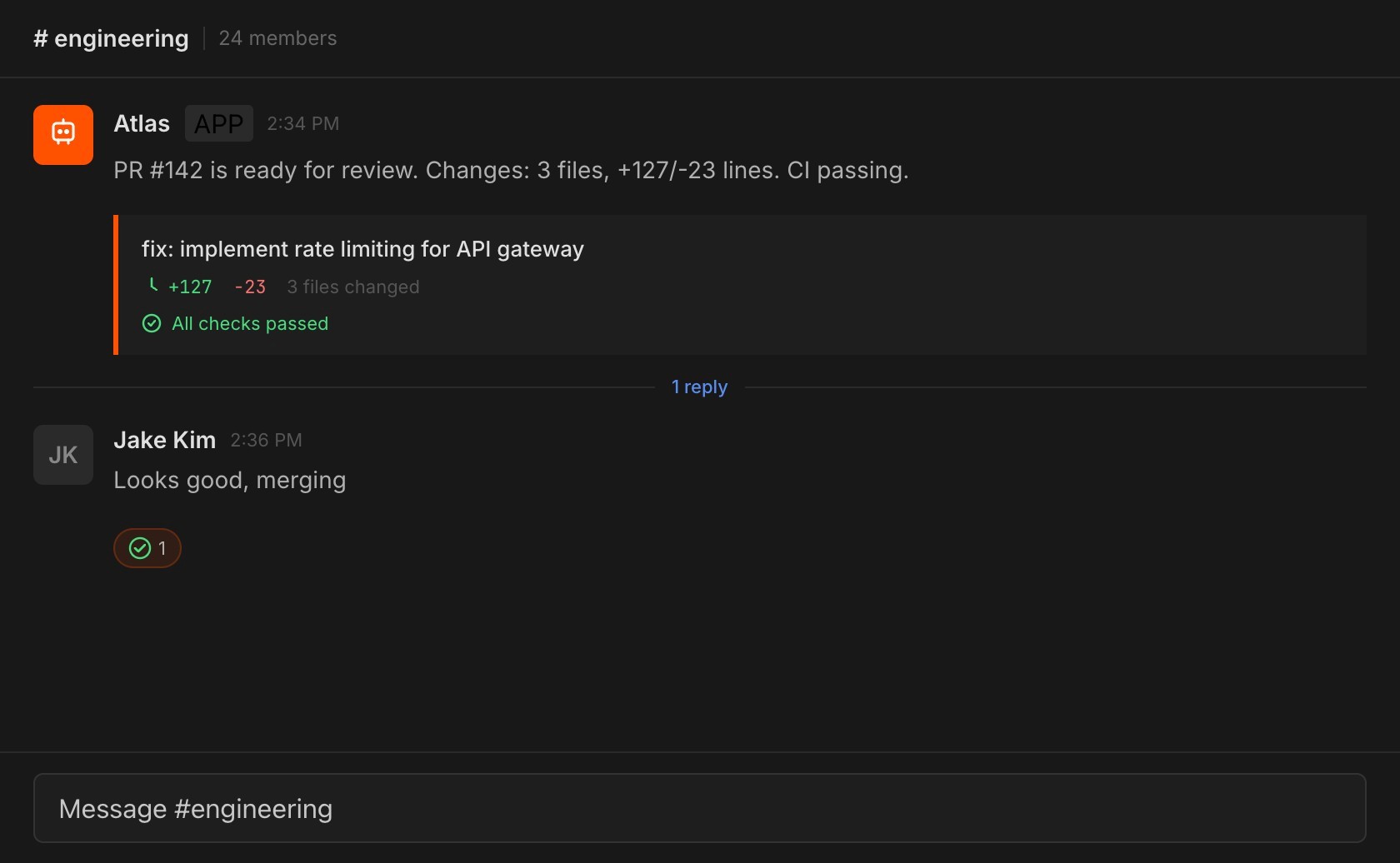
Engagement modes
Configure agents to respond to all messages, mentions only, or stay quiet per channel. Thread-level overrides give granular control.
The human rule
In group chats, agents follow human social norms — they don't respond to every message. Quality over quantity, just like a good teammate.
INTELLIGENCE
Code intelligence that understands your entire codebase
Workforce indexes your codebase into entities and relationships — functions, structs, traits, modules — and makes them queryable. Ask natural language questions, traverse the dependency graph, explain any function, or run impact analysis before making changes.
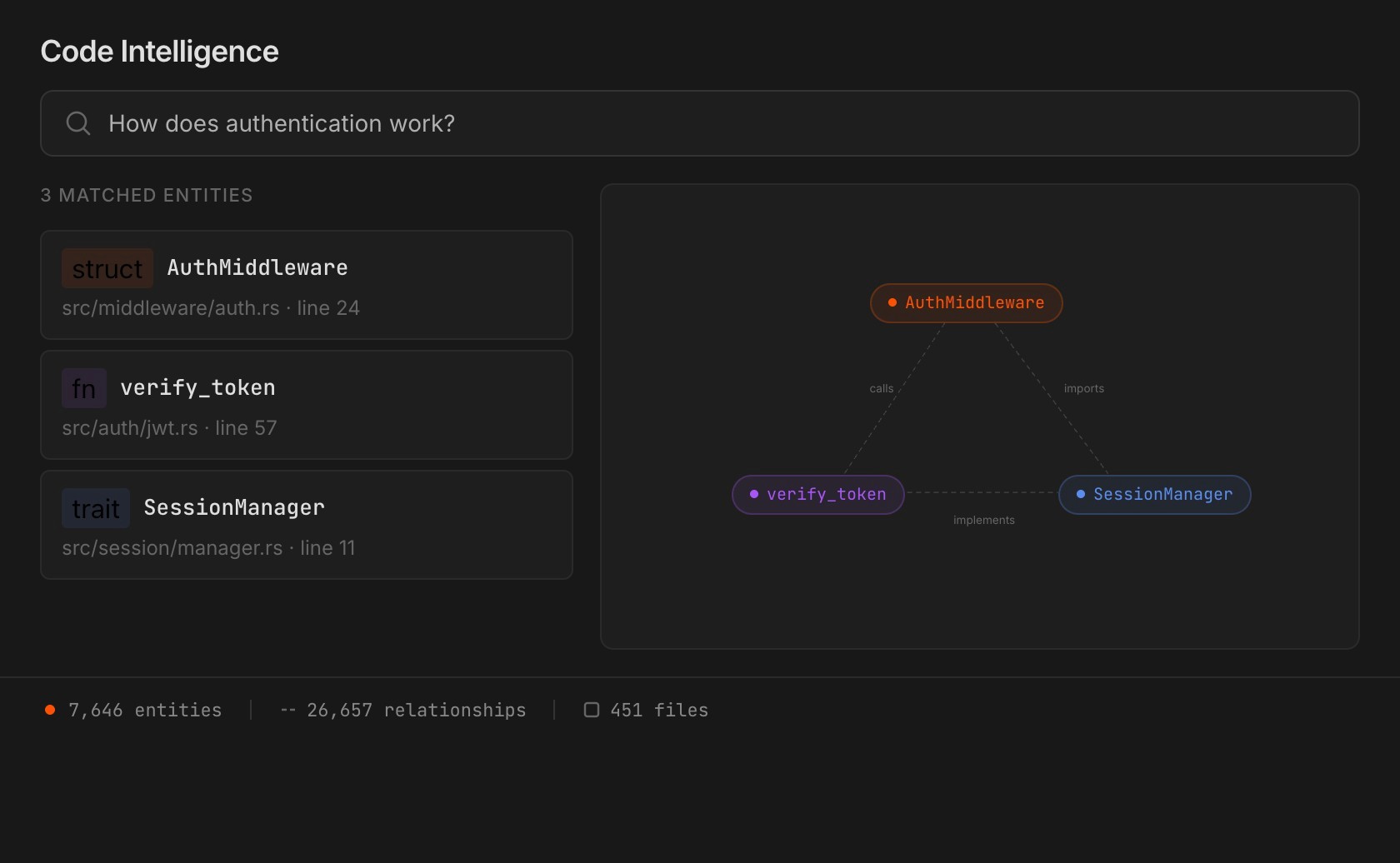
Semantic search
Ask "How does authentication work?" and get a precise, contextual answer grounded in your actual code — not documentation.
Impact analysis
Before renaming a function or changing a signature, agents check what breaks — callers, tests, dependencies — and flag the blast radius.
We're a two-person team building a full product. Workforce handles the dev cycle end to end — tickets, PRs, code review, merge. We focus on product decisions and it handles the engineering throughput.

VP Engineering
Fashion Tech Startup
26K+
relationships mapped across production codebases
SECURITY
Three layers of security. Your code never leaves.
Workforce was built for teams that handle sensitive codebases — financial services, healthcare, crypto, defence. Security isn't a feature we added. It's the foundation everything else runs on.
LAYER 1
Policy Engine
Tool-level access control with priority, scope, and pattern matching. Define what each agent can and can't do at the global, team, or individual level. Agents can propose new rules — but only humans can approve them.
LAYER 2
Sentinel Scanner
Detects dangerous code patterns in real time — reverse shells, crypto mining, data exfiltration, path traversal. Runs automatically on every file change and available on-demand. Catches what code review misses.
LAYER 3
Integrity Verification
Cryptographic hashes are computed at load time for every agent's identity files — SOUL.md, IDENTITY.md, AGENTS.md. If any file has been tampered with, the system alerts immediately. No agent can silently change who it is.

IN PRODUCTION
Running on real codebases today.
We don't disclose customer names — but here's where Workforce is shipping code right now.
Want to be next?
We're onboarding a small number of teams each quarter. If you're running a codebase that needs more engineering throughput, let's talk.
WHY WORKFORCE
Not a copilot. Not a chatbot. Not another wrapper.
The market is full of AI tools that help developers write code faster. Workforce does something fundamentally different — it coordinates autonomous agents as an engineering team.
VS. AI COPILOTS
Copilots autocomplete. Workforce ships.
Copilots suggest the next line of code for a single developer in an editor. Workforce agents independently pick up tickets, understand your codebase through a knowledge graph, write full PRs, get them reviewed by other agents, check CI, and merge. It's the difference between a spellchecker and a writer.
VS. AUTONOMOUS AGENTS
One agent in a sandbox vs. a coordinated team.
Devin operates as a single agent in a cloud sandbox. Workforce coordinates multiple agents with persistent five-layer memory, running on your infrastructure. Devin's cloud-only model means your code leaves your environment. Workforce is self-hosted by default.
VS. OPEN-SOURCE FRAMEWORKS
A product, not a project.
Open-source frameworks give you building blocks. You still need to build the orchestration, memory model, security layers, integrations, and operational tooling yourself. Workforce is production-ready — with deep integrations, a three-layer security model, and adaptive cost optimisation built in.
VS. DEV AGENCIES
£30K/month for meetings. Or £5K/month for shipped code.
A dev agency gives you engineers who context-switch between clients and lose knowledge when people leave. Workforce agents have persistent memory of your codebase, work around the clock, and cost a fraction of the price. Per-ticket cost tracking means you see exactly what you're paying for.

FAQ
How is Workforce different from GitHub Copilot or Cursor?
Copilots autocomplete your code line by line. Workforce agents autonomously pick up tickets from Linear, understand your codebase through a knowledge graph, write pull requests, review each other's work, and merge when CI passes. They're teammates, not autocomplete.
Is Workforce self-hosted?
Yes. Workforce runs entirely in your infrastructure. Your code, your data, your control. This is critical for organisations handling sensitive data or operating in regulated industries.
What LLM providers does it support?
Workforce supports Claude, Grok, and Gemini with automatic cross-provider failover. If your primary provider goes down, agents seamlessly switch to the next available model.
How long does deployment take?
Most teams are running their first agents within days. Agents are configured in a single TOML file, connect to your existing GitHub, Linear, and Slack, and bootstrap themselves automatically.
What programming languages does it support?
Workforce is built in Rust and is language-agnostic — agents can work with any codebase. The knowledge graph indexes functions, structs, traits, and modules across your entire repo.
How does the memory system work?
Five layers of persistent memory — working, episodic, semantic, team, and organisation — backed by both filesystem and vector store. Agents actively curate their long-term memory during scheduled heartbeats.
What does licensing look like?
We offer flexible licensing models including annual platform licenses with implementation support. Book a demo and we'll walk you through pricing based on your team size and needs.